BY WILLIAM DEAN
Every year around this time, beer lovers find themselves blessed with prized bottles of barrel-aged stout.
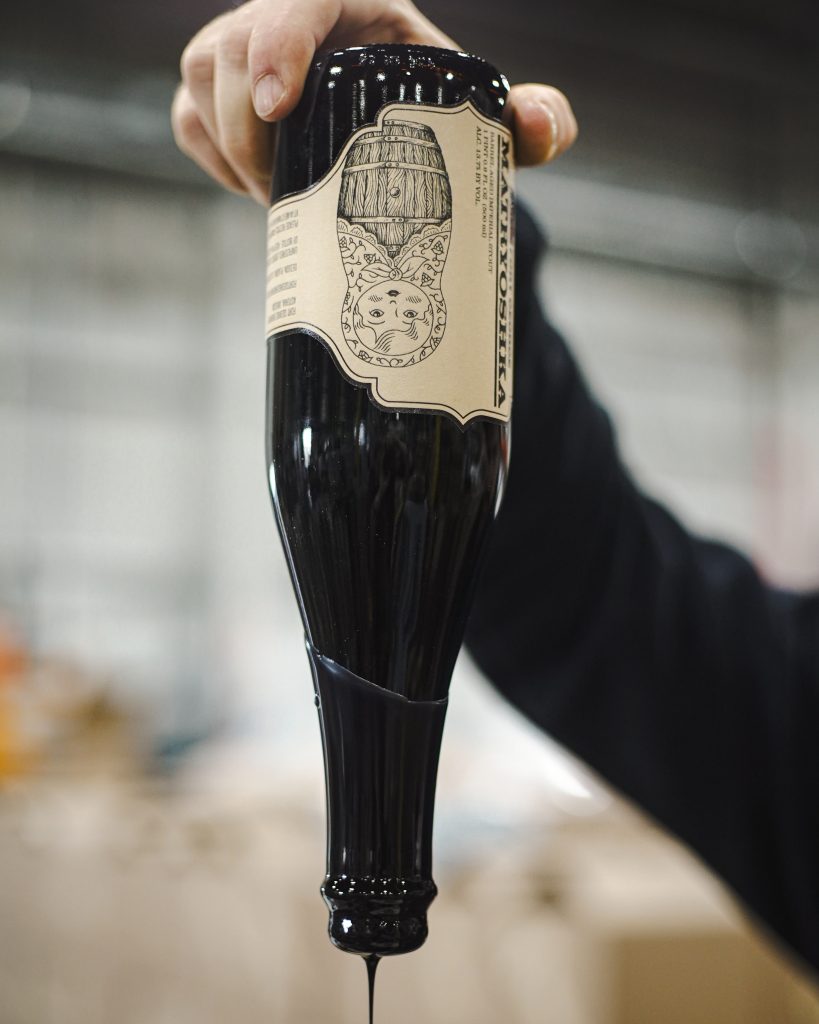
Most of the brown bottles have been dipped in wax – a thick coating that covers the cap and drips down the neck.
It’s pretty to look at, given all the different wax colors being used, from standard black and white to sky blue and bubble gum pink.
But does the waxing actually serve a purpose? Does it protect the beer?
For the past 25 years or so, craft beer drinkers have been told that the extra seal prevents damaging oxidation, much like wax around a wine cork.
Dave Coyne, co-owner and head brewer at Astoria’s Obelisk Beer Co., calls the oxygen-intrusion theory “outdated,” given the performance of modern crown bottle caps.
Coyne previously worked at Fort George Brewery, where he specialized in unique beers, including plenty of barrel-aged varieties. At Obelisk, he still takes the time to dip his finest stouts in wax, but it’s not to safeguard what’s inside the bottle.
“Any scientific reasons are outdated at this point with improvements in bottle caps,” he said. “They have oxygen-scavenger linings on the inside and create a really good seal on the glass.”
So why mess with wax?
It’s all about appearance and marketing, brewers say. Call it the coolness factor.
Beers in wax-dipped bottles practically shout “Buy me! I’m special!”
That’s usually true. Stouts and barley wines are difficult to make, testing a brewer’s artisan skills and often taking more than three years. Some batches bounce from barrel to barrel, collecting subtle flavors.
Consumers, in turn, are willing to pay more for a bottle they can cellar like fine wines. That’s important, considering how much a typical aged stout retails for at the bottle shop: topping $30 in some cases.
Fort George, the creator of “Stout Month” and host of the Festival of Dark Arts, produces so many aged stouts it has to decide which get canned and which are bottled and waxed – a more expensive process.
Large breweries have state-of-the-art, high-speed packaging lines, but waxing remains an old school, labor-intensive enterprise that could easily be done in somebody’s basement.
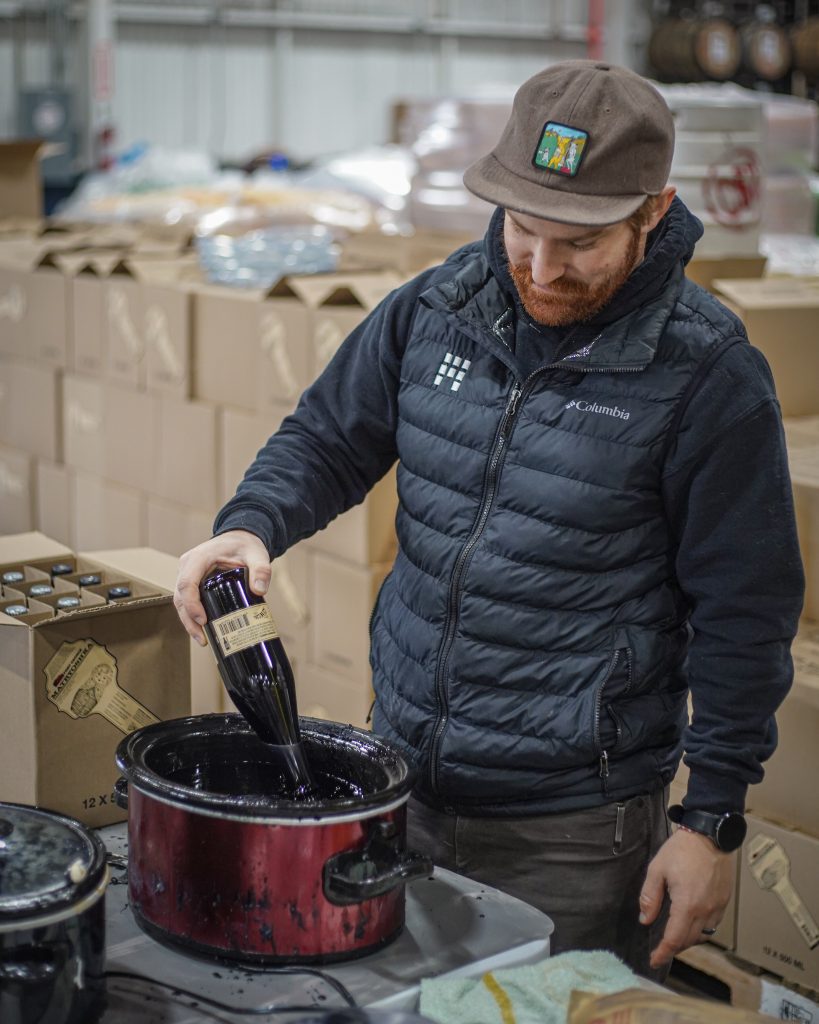
The wax is typically heated in Crock-Pots, with workers dipping bottles by hand, one by one. Each bottle is usually dunked at least twice to get a thick enough coating to survive handling.
Coyne thinks waxing is here to stay because it’s taken root in a quasi-romantic way.
“It’s part of the look and ceremony of opening a very special bottle,” he said.
If there’s a downside to these impressive stouts, it’s opening a bottle meant for two that’s smothered in wax. It can be a trying exercise that’s probably not suited for a first date.
Here’s a three-step process recommended by brewers:
- Put the bottle in the freezer for a few minutes to make the wax more brittle.
- Using a sharp knife, notch the wax below the crown.
- Finish the job with a sturdy bottle opener.
It’s worth a little extra work when you hear that lovely, seductive hisss.